






Disclaimer
This analysis is based on personal trading experience, practical orderflow observation, and independent research. The views expressed are for educational purposes only and reflect the author’s understanding of market behavior. Copying or reproducing this paper, in whole or in part, is strictly prohibited
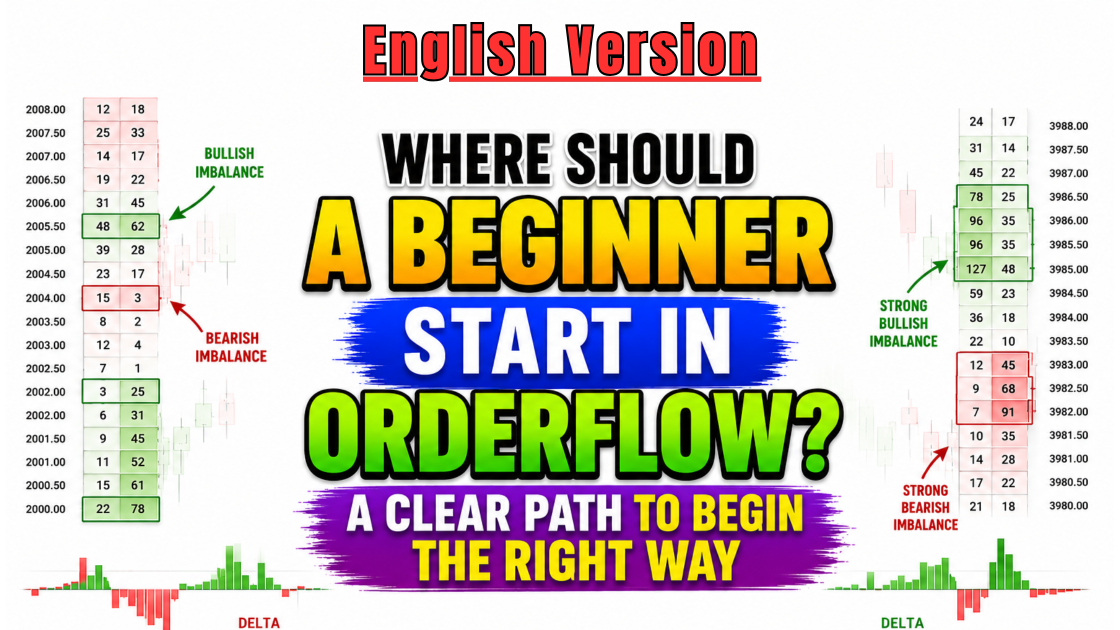
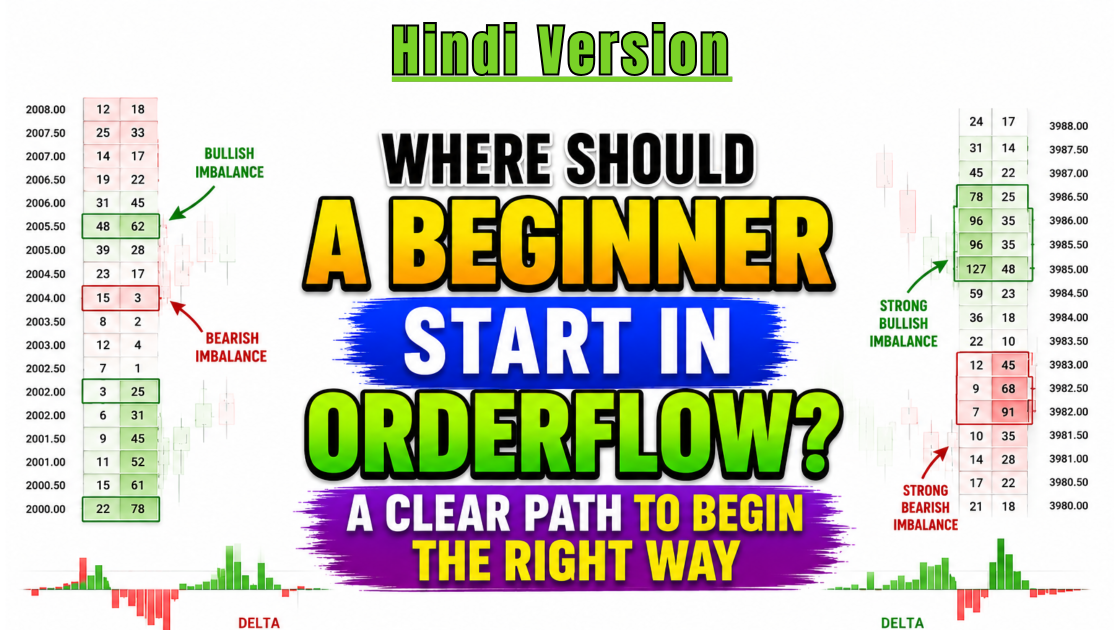
Beginner ko Orderflow Kahan Se Start Karna Chahiye? Ek Clear Starting Path
Zyada tar beginners orderflow use karne me isliye struggle nahi karte kyunki orderflow difficult hai.
Wo struggle isliye karte hain kyunki wo galat jagah se start karte hain.
Wo charts open karte hain, imbalance explore karte hain, volume follow karne ki koshish karte hain aur bahut jaldi confused ho jaate hain. Isliye nahi kyunki unme capability nahi hai, balki isliye kyunki wo sab kuch ek saath samajhne ki koshish kar rahe hote hain.
Most traders fail isliye nahi hote kyunki market random hai. Wo fail isliye hote hain kyunki wo base build kiye bina advanced concepts samajhne ki koshish karte hain.
Orderflow koi aisi cheez nahi hai jo aap bas “pick up” kar lo. Ye ek process hai jo step by step build hota hai.
Ye article setups ya entries sikhane ke liye nahi hai. Iska simple purpose hai aapko clarity dena ki kaha se start karna hai, kis cheez par focus karna hai, aur realistically kya expect karna chahiye jab aap ye concepts seekhna start karte ho.
Sabse Pehle Ye Samajhiye — Orderflow Learning Time Leti Hai
Start karne se pehle ek expectation clear hona bahut zaroori hai.
Aap kuch dinon me orderflow nahi samajh paoge.
Starting me:
- Charts messy lag sakte hain
- Concepts disconnected feel ho sakte hain
- Aapko doubt ho sakta hai ki ye actually work bhi karta hai ya nahi
Ye phase bilkul normal hai. Kyuki aap sirf koi tool ya indicator nahi seekh rahe. Aap ye samajh rahe ho ki market internally kaise behave karta hai, participation, intent aur movement ek dusre se kaise connected hote hain.
Jab aap ye accept kar lete ho, learning smoother ho jaati hai. Is clarity ke bina bahut log bahut jaldi quit kar dete hain.
Step 1: Auction Zero (HTF) Se Start Karo
Aapka starting point hamesha Auction Zero on HTF (Higher Timeframe) hona chahiye.
HTF ka simple matlab hai bigger picture — jaise:
- 15-minute
- 30-minute
- 1-hour
- Daily charts
Ye pehla step kyun hai?
Entries ya signals ke baare me sochne se pehle aapko ye samajhna zaroori hai:
Market abhi kis position me operate kar raha hai?
Yahi jagah hai jahan zyadatar traders galti karte hain, wo market ki positioning samjhe bina entries dhoondhne lagte hain.
Auction Zero aapko recognise karne me help karta hai jab market:
- Previous value se move kar raha ho
- Nayi area test kar raha ho
- Us shift ko accept ya reject kar raha ho
Ye ek reference point ki tarah kaam karta hai, signal ki tarah nahi.
Is stage par aapko kya expect karna chahiye
Starting me ho sakta hai aap Auction Zero perfectly mark na kar pao.
Wo completely fine hai.
Aapka kaam perfection nahi hai. Aapka kaam observation hai.
Time spend karo:
- Price important areas ke around kaise behave karta hai
- Un areas se move karne ke baad kaise react karta hai
Slowly ek interesting cheez hona start hoti hai. Aap notice karna shuru karte ho:
“Kuch areas dusron se zyada important hote hain.”
Jab charts random lagna band ho jaate hain, wahi aapki pehli real progress hoti hai.
Common Doubt
“Kya mujhe isko completely master karna padega before moving ahead?”
Nahi.
Aapko sirf basic familiarity chahiye. Clarity dheere dheere develop hoti hai.
Step 2: POC (Point of Control) & Effort vs Reward
Jab aap bigger picture observe karne me comfortable ho jao, tab next step hai POC (Point of Control).
POC ka simple matlab hai:
Wo price jahan sabse zyada trading activity (volume) hui.
Ye basically buyers aur sellers ke beech maximum agreement area hota hai.
Ye next step kyun hai?
Ab aapka focus shift hota hai:
- Market kaha hai
se - Market us location par kaise behave kar raha hai
Beginner ke taur par aap kya experience karoge
Initially zyada tar log assume karte hain:
High volume = strong move
Lekin jaise jaise aap observe karoge, aap ek alag cheez notice karoge:
Kabhi kabhi high volume ke baad bhi price move nahi karta.
Yahi jagah hai jahan Effort vs Reward ka concept important banne lagta hai.
- Effort = Volume
- Reward = Price movement
Yahan focus kis cheez par hona chahiye
POC ke basis par trade karne ki koshish mat karo.
Instead, ye notice karna start karo:
“Kya effort actually result produce kar raha hai?”
Starting me ye unclear feel ho sakta hai.
Time ke saath ye orderflow ki sabse important observations me se ek ban jaata hai.
Common Doubt
“Kya mujhe har POC mark karna chahiye?”
Nahi. Chart par sab kuch mark karne ke bajaye behaviour samajhne par focus karo.
Step 3: Imbalance Ko Introduce Karo — Lekin Patience Ke Saath
Ab aap Imbalance explore karna start kar sakte ho.
Ye wo stage hai jahan most beginners jaldi karte hain aur confuse ho jaate hain.
Imbalance kya represent karta hai
Ye un moments ko highlight karta hai jahan:
- Buyers ya sellers aggressively act kar rahe hote hain
Naturally, ye attention attract karta hai.
Lekin ek cheez early samajhna bahut zaroori hai
Imbalance koi shortcut nahi hai.
Isi wajah se bahut traders ko lagta hai ki imbalance “kabhi work karta hai aur kabhi randomly fail ho jata hai.”
Reality me issue imbalance nahi hota, issue hota hai usko use karne ka approach.
Aapko kya expect karna chahiye
Starting me:
- Aapko bahut saare imbalances dikhai denge
- Aapko lagega sab movement lead karne chahiye
Lekin wo nahi karenge. Aur wahi se actual learning start hoti hai.
Is stage par approach kya honi chahiye
Har imbalance trade karne par focus mat karo.
Focus karo samajhne par:
- Kuch imbalances movement kyun create karte hain
- Aur kuch kyun nahi karte
Slowly aap isko connect karna start karoge:
- Location ke saath (Auction Zero se)
- Behaviour ke saath (Effort vs Reward se)
Aur wahi point hai jahan imbalance practical sense banana start karta hai.
Common Doubt
“Hindsight me sab clear kyun lagta hai?”
Kyuki move hone ke baad context obvious ho jaata hai. Learning ka goal hai us context ko pehle recognise karna.
Step 4: Volume Interest & Participation — Activity Samajhna
Jaise jaise aap progress karte ho, learning observation se interpretation ki taraf shift hoti hai.
Ab aapka focus move karta hai:
Volume Interest and Participation par.
Ye stage kis baare me hai
Ye samajhna:
- Market activity kab increase ho rahi hai
- Buyers ya sellers me se kaun zyada active hai
Yahan aapko kya expect karna chahiye
Starting me ye stage thodi difficult feel ho sakti hai.
Aap hamesha clearly identify nahi kar paoge:
- Kaun control me hai
- Price certain way me react kyun kar raha hai
Aur ye normal hai.
Real shift yahin hota hai
Aap charts ko patterns ya indicators ki tarah dekhna band kar dete ho.
Aur unhe dekhna start karte ho as:
Real time me decisions lete hue participants.
Yahi point hai jahan understanding practical banna start hoti hai, sirf theoretical nahi.
Ye instantly nahi aata, observation aur screen time ke saath develop hota hai.
Step 5: Risk vs Reward — Trading Ko Seriously Lena Start Karo
Jab aap is stage tak pahunchte ho, ek principle bahut important ho jaata hai:
Aapko Risk vs Reward ko respect karna hi padega.
Best understanding bhi proper risk control ke bina fail ho jaati hai.
Simple meaning
- Risk → Aap kitna lose kar sakte ho
- Reward → Aap kitna gain karna chahte ho
Beginners usually kya expect karte hain
Bahut log believe karte hain:
Better understanding = zyada winning trades
Lekin market aise kaam nahi karta.
Achhi understanding ke baad bhi:
- Kuch trades fail honge
Aapko kis cheez par focus karna chahiye
- Random trades avoid karo
- Forced entries avoid karo
- Risk controlled rakho
Aap kya experience karoge
Kabhi trades miss honge. Kabhi hesitation feel hogi.
Ye discipline build hone ka part hai.
Long-term consistency control se aati hai, frequency se nahi.
Kaise Sab Kuch Connect Hota Hai (Big Picture)
Agar aap patience ke saath is learning path ko follow karte ho, toh dheere dheere sab connect hona start ho jaata hai:
- Auction Zero → Context deta hai
- POC → Activity kaha hai wo dikhata hai
- Effort vs Reward → Strength ya weakness dikhata hai
- Imbalance → Intent dikhata hai
- Volume Participation → Control dikhata hai
- Risk vs Reward → Trading ko sustainable rakhta hai
Starting me ye sab separate ideas lag sakte hain. Lekin time ke saath ye ek complete picture banana start kar dete hain.
Final Thought
Starting me kuch bhi fully clear feel nahi hoga. Aur ye koi problem nahi hai.
Sabse badi mistake hai clarity ko bahut jaldi expect karna.
Orderflow fast seekhne ke baare me nahi hai. Ye sahi tarike se seekhne ke baare me hai.
Agar aap patience ke saath is path ko follow karte ho, toh aap sirf concepts nahi seekhoge.
Aap market ko predict karne ki koshish karna band kar doge, aur samajhna start karoge ki market actually move kaise karta hai.
If you notice any discrepancy in this article or have questions regarding the concepts discussed, please contact the admin at sg@orderflowwithsg.com or connect with us through our Telegram channel.

Sabse aasaan kardiye sirji
Thanks
all cleared ……thank u sir for doing all these work for us …aur wo bhi without charging a single penny.